
























In Honiara, a game that often begins with a dartboard in a home, pub or workplace is slowly becoming something much bigger.
For many players, darts has long been a social activity — a way to meet friends, relax after work and enjoy a little friendly competition. But the formation of the Honiara City Darts Association (HCDA) is helping turn that community interest into a more organized sporting movement.
HCDA was established to bring clubs and players together under one association. Its formation came as interest in darts continued to grow across Honiara and nearby communities, while the sport also needed stronger organization, common rules and a clearer path for players to develop.
According to HCDA, representatives from different clubs believed the sport would benefit from working together rather than operating separately.
The association was therefore formed to promote and develop darts through leagues, tournaments and other organized activities.
As a not-for-profit organization, HCDA says its purpose is not to make money from competitions. Instead, its focus is on growing the sport, increasing participation and creating opportunities for players, clubs and the wider community.
“Our vision is for darts to become a respected, inclusive and competitive sport with sustainable pathways for community participation, player development and higher-level performance,” HCDA said.
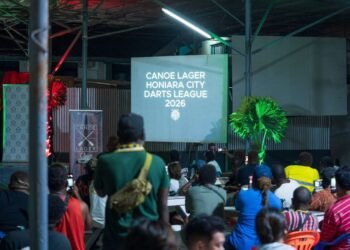
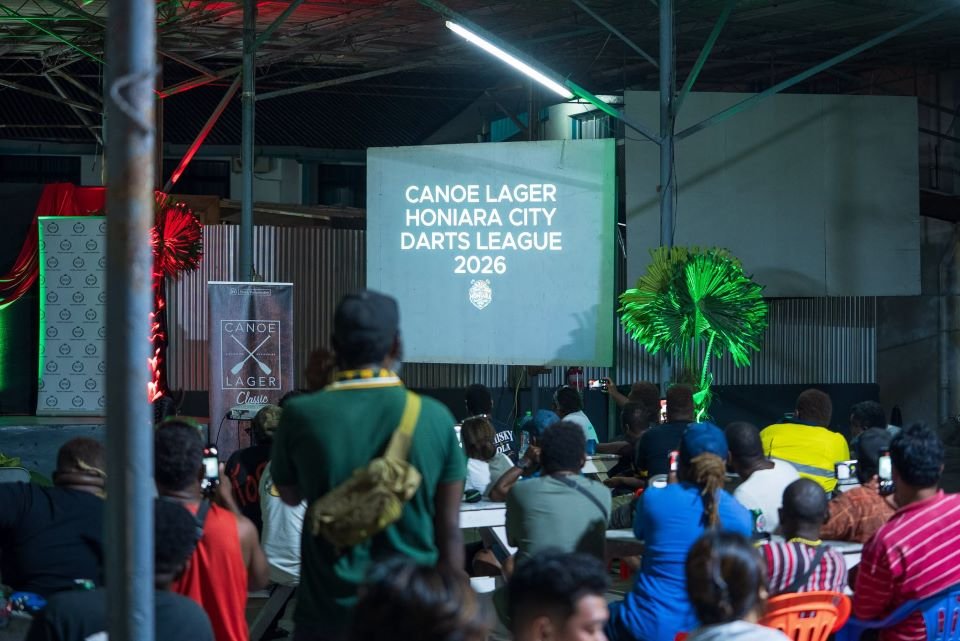
That vision is now being tested through the Canoe Lager Honiara City Darts League 2026.
Unlike a short tournament lasting only a few days, the league gives players and teams the chance to compete regularly throughout a season. For HCDA, that regular competition is important because it can help players improve their skills while also teaching discipline, confidence and respect for opponents.
The association has introduced official playing rules, competition regulations, scheduled fixtures, registered player lists and administrative procedures. The competition also includes standings, playoffs, finals, promotion and relegation.
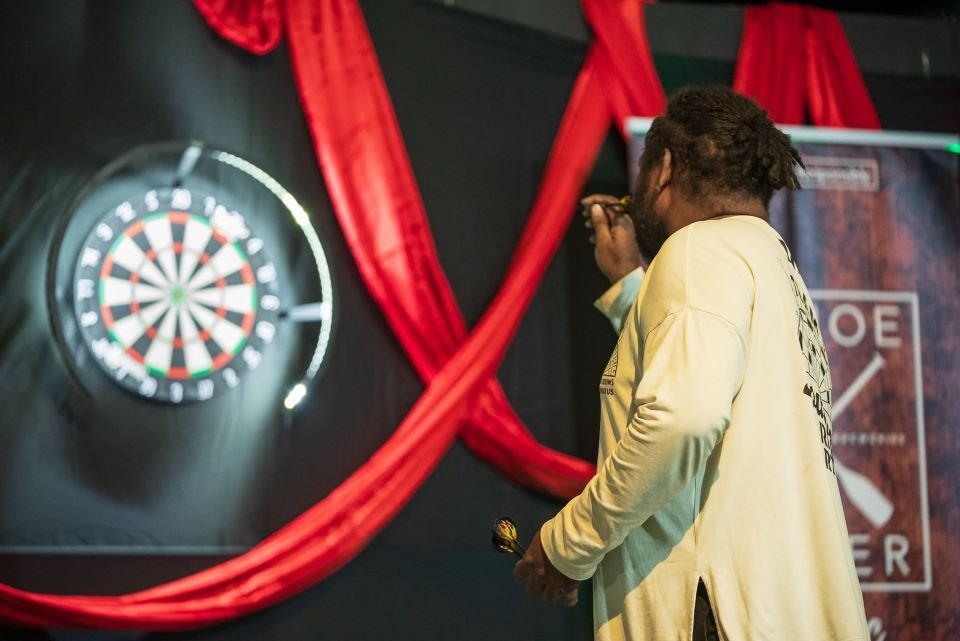
“We encourage teams to compete strongly on the dartboard while respecting opponents, match officials, venues and supporters,” HCDA said.
“Players and captains share responsibility for maintaining an orderly environment and demonstrating good sportsmanship.”
For the association, winning is only one part of the game.
How players behave, how teams treat their opponents and how they respect officials and venues are also important parts of building a healthy sporting culture.
The 2026 season has brought another major change.
The league has been divided into Premier Division, Division One and Corporate Division. This allows established clubs, developing teams, workplace groups, businesses and social teams to compete within one organized structure.
Premier Division provides a higher level of competition for established teams. Division One gives developing teams an opportunity to improve, with promotion and relegation providing a pathway between divisions.
Corporate Division, meanwhile, gives workplace, business and social teams a more accessible way to enter organized darts.
The growth has been significant.
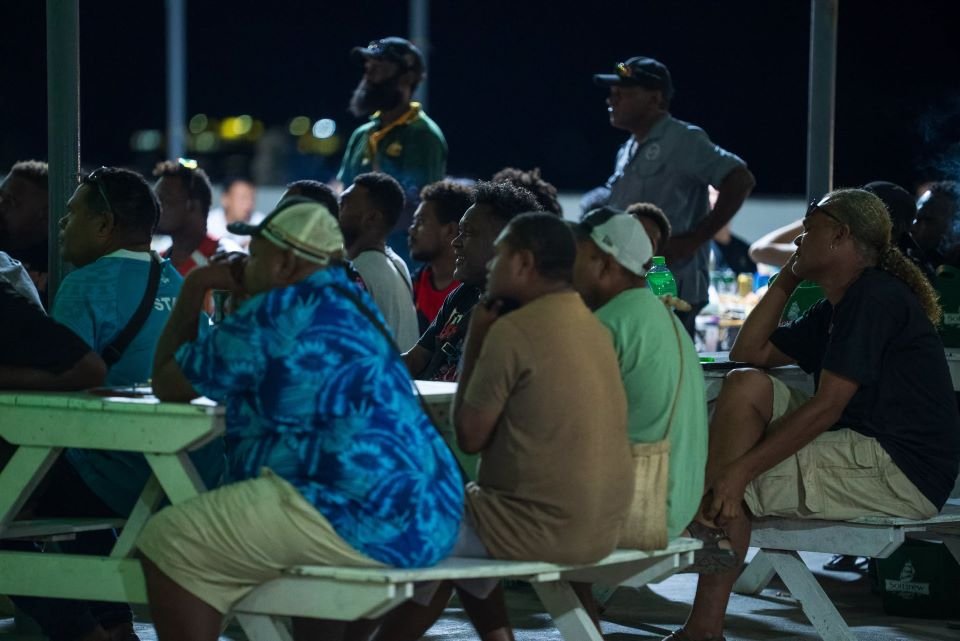
The previous season had 12 teams. When the 2026 league began, 43 teams registered — a new record for the competition. Although one team later withdrew, participation remains at a level the association says reflects strong interest in darts across Honiara.
“This expansion is encouraging, but it also places greater responsibility on HCDA to keep fixtures, results, venues and administration fair, reliable and sustainable,” the association said.
Behind those numbers are people from different parts of the city who may otherwise never meet.
A darts match can bring together workers from different companies, players from different neighborhoods and people from different social backgrounds. A weekly fixture can become more than a sporting commitment. It can become a regular meeting place.
“Darts is an accessible sport that brings together people from different clubs, workplaces, neighborhoods and social backgrounds,” HCDA said.
“Through the league, players who might not otherwise meet gather regularly at venues across Honiara, forming new friendships, strengthening club identity and becoming part of a wider sporting community.”
That community connection is one of the reasons HCDA sees darts as more than a game played at a board.
The league also brings together venue operators, sponsors, officials, volunteers and supporters. Each has a role to play in keeping the competition running.
“By promoting respect, cooperation and shared responsibility, HCDA aims to make darts a welcoming and positive community activity while maintaining a strong competitive standard,” the association said.
For new players, the sport can offer a relatively simple entry point.
Someone can start by playing socially with friends, join a workplace team or become involved with a developing club. From there, regular competition can provide the experience needed to improve.
“Regular matches help newcomers improve their scoring and finishing, learn competition procedures, understand sportsmanship and build confidence against a variety of opponents,” HCDA said.
The association also wants to create more opportunities for young people.
Plans include introductory competitions, junior development activities, skills sessions and stronger engagement with schools, youth groups and communities.
“The aim is to provide a clear progression from learning the game to competing regularly and, eventually, reaching higher levels,” HCDA said.
“Expanding opportunities for youth, women and corporate participants is central to HCDA’s mission.”
But building a sustainable darts competition is not without challenges.
One of the biggest problems is the lack of a dedicated darts venue in Honiara.
At present, clubs depend on pubs and other participating venues to host matches. These venues need suitable boards, lighting, space and safe throwing areas.
“One of our greatest challenges is the absence of a dedicated darts venue in Honiara,” HCDA said.
“Pubs and other participating venues can host scheduled fixtures, but players and clubs have no permanent facility for regular training and practice.”
Many local darts clubs have grown from simple beginnings.
A team may start because someone puts a dartboard in their home and invites friends and neighbors to play. Another group may form because workers regularly play at a pub after work. In some workplaces, a board becomes a way for employees to relax and socialize.
These grassroots beginnings show the community appeal of darts.
However, without a permanent facility, players have fewer opportunities for structured coaching and regular practice.
Equipment is another challenge.
Quality dartboards, surrounds, lighting and scoring systems cost money. As the number of teams grows, more suitable boards and venues are needed.
Funding is therefore important.
Registration fees help with administration, but they do not cover all the costs involved in running a large league. There are expenses for equipment, venue arrangements, match operations, communication, trophies, prizes, playoffs, finals and player development.
HCDA said it is grateful to Solomon Breweries Limited for supporting the league as Platinum Sponsor, with Canoe Lager as the lead brand.
“We are grateful to Solomon Breweries Limited for joining the league as Platinum Sponsor and providing a strong foundation for the competition,” HCDA said.
The association is also looking for more partners to help support facilities, equipment, player development and the long-term growth of darts.
Another challenge is administration.
A large league requires people to organize fixtures, check results, communicate changes, coordinate venues and keep matches running on schedule.
Most HCDA organizers have full-time jobs and other responsibilities. Unlike professional sporting organizations that can employ full-time staff, much of the work in Honiara is done by volunteers outside normal working hours.
That means the success of the league depends on everyone taking responsibility.
Officials must submit information on time. Players must follow the rules. Teams must respect venue property. Captains must communicate with organizers. Clubs, sponsors and venues must work together.
The association’s recent growth has already produced several important moments.
One was the 2025 Honiara Darts League Grand Final.
HCDA said the final featured a professional stage setup and livestream, helping bring the sport to a wider audience.
“A standout moment was the staging of the 2025 Honiara Darts League Grand Final,” HCDA said.
“Its professional stage setup and livestream attracted considerable attention, presented darts in a more engaging and visible way, and significantly raised the sport’s profile across Honiara.”
The jump from 12 teams to 43 teams for the 2026 season was another major milestone.
The official launch of the Canoe Lager Honiara City Darts League 2026 also brought together team representatives, HCDA executives, organizers, venue partners and sponsors.
Behind the scenes, the association has also worked to strengthen its administration.
HCDA now has a constitution, official playing rules, competition regulations, digital registration, a venue preparedness checklist and improved fixture-management processes.
“These administrative achievements may attract less attention than performances on the board, but they are vital to building a credible and sustainable association,” HCDA said.
The association is now looking beyond the current season.
Its immediate priority is to complete the 2026 competition successfully while ensuring that fixtures, results, venues and administration remain reliable.
One of its main ambitions for the next season is the introduction of a dedicated women’s division, if there are enough players and teams to make it sustainable.
“A Women’s Division would create a more visible and supportive pathway for women to participate, compete and develop,” HCDA said.
Youth development is also expected to receive more attention.
The association wants to provide more introductory competitions, junior activities and skills sessions, while building stronger relationships with schools and youth groups.
HCDA also recognizes that player development needs people who can teach, organize and manage the sport.
“Player development must be matched by stronger coaching and administration,” the association said.
It wants to provide training opportunities for coaches, callers, chalkers, match commissioners, tournament organizers and club administrators.
Another planned improvement is the gradual introduction of electronic scoring.
Electronic scoring could make it easier to record individual scores, match results and player statistics while reducing calculation and transcription errors.
HCDA says its rules already recognize approved electronic results as having the same official status as completed score sheets.
However, the association says the change must be introduced carefully.
“The transition would need to be managed carefully, with suitable devices, dependable software, appropriate venue arrangements and training for officials and team representatives,” HCDA said.
“Our preference is to begin gradually, learn from the experience and expand as resources allow.”
Improving the quality of playing facilities is also part of the long-term plan. Dartboards, lighting, throwing areas and match setups all need to meet suitable standards as the competition grows.
Eventually, HCDA hopes to build stronger relationships with darts organizations at local, national and international levels.
The bigger dream is to create a pathway that starts with a person picking up darts for the first time and could eventually lead to city-level competition, national representation and international opportunities.
“Ultimately, we aim to build a pathway from grassroots participation to city-level competition, national representation and, when opportunities arise, international participation,” HCDA said.
“We want players to be not only talented, but also disciplined, well prepared and capable of representing their clubs, Honiara and Solomon Islands with pride.”
For now, HCDA remains a developing organization.
But the growing number of teams, the involvement of sponsors and venues, and the enthusiasm of players show that darts has found a strong community base in Honiara.
What began for many people as a simple social game is becoming an organized sport with rules, divisions, fixtures and ambitions for the future.
The challenge for HCDA is to manage that growth carefully without losing the community spirit that helped darts grow in the first place.
“We want darts to be recognized not merely as a social activity, but as a sport that develops concentration, discipline, confidence, friendship and healthy competition,” HCDA said.
For the players standing at the line, the target may still be only a few metres away.
But for Honiara’s growing darts community, the target is much bigger: building a sport that brings people together today while creating opportunities for the players of tomorrow.